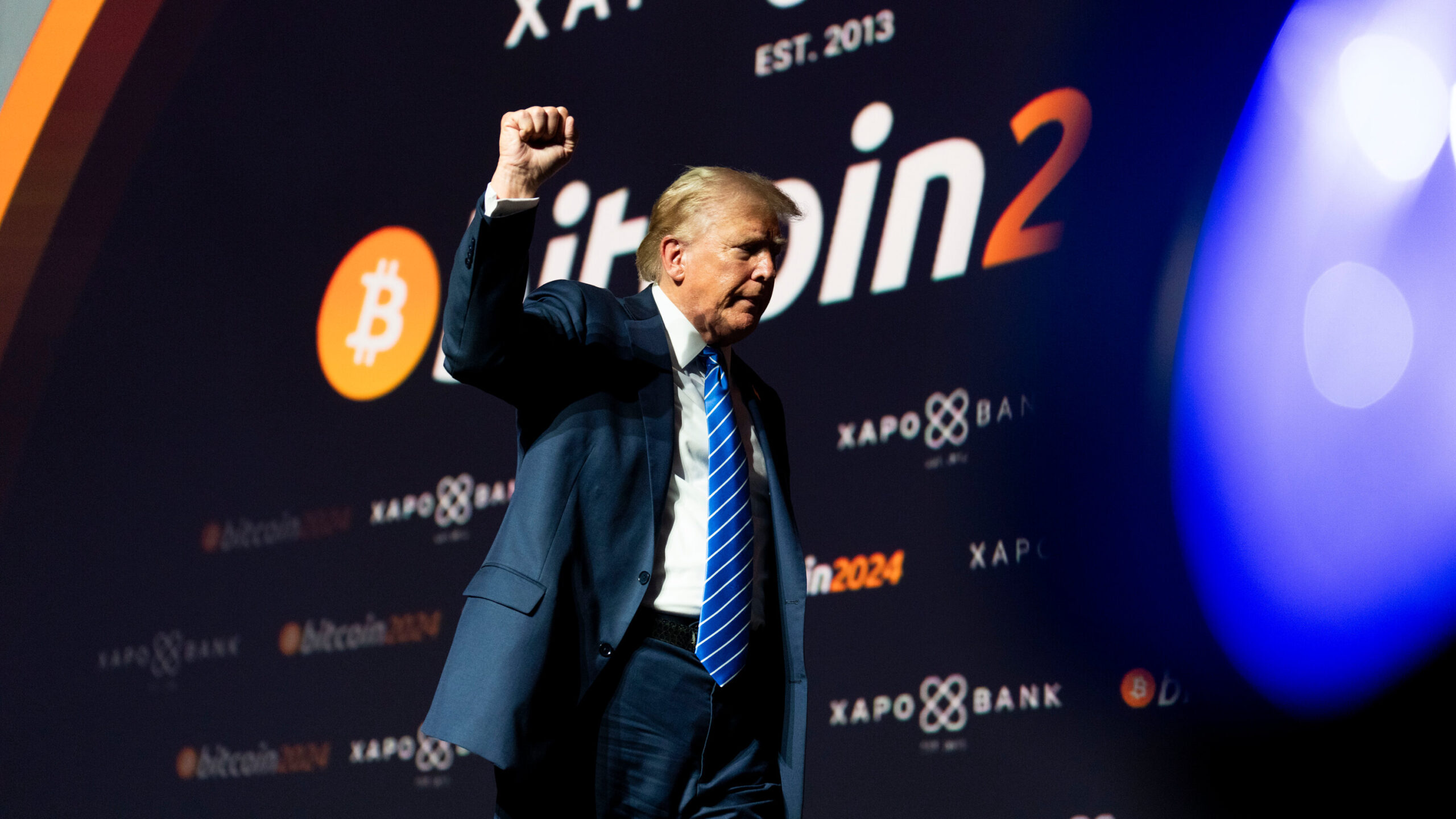
Trump Stresses U.S. Crypto Leadership at Washington Policy Summit, Promises Pro-Crypto Agenda
Trump’s Vision for U.S. Leadership in Crypto at Washington Policy Summit
President Trump Reaffirms U.S. Commitment to Leading the Global Crypto Space
At a pivotal moment in the cryptocurrency industry, President-Elect Donald Trump delivered a keynote address at the Washington Crypto Policy Summit. The event, hosted by the Blockchain Association, brought together blockchain enthusiasts, lawmakers, and leaders from top crypto firms. Trump’s speech underscored his strong belief in the U.S. government’s ability to lead the world in digital asset innovation and regulation.
Trump’s message to the audience was clear: the U.S. will not allow other countries, particularly China, to take the lead in blockchain and cryptocurrency development. The incoming president highlighted the importance of keeping blockchain innovation, and by extension, the cryptocurrency industry, rooted in American soil. He emphasized that the U.S. must position itself as the global powerhouse for digital assets, ensuring that jobs, businesses, and innovation remain in the country.
U.S. Government’s Pro-Crypto Stance: A Clear Policy Direction
During his speech, Trump restated the U.S. government’s pro-crypto stance, reassuring the audience that his administration intends to make the U.S. a hub for blockchain technology and Bitcoin. This message was met with a positive reception from the crypto industry, which has faced regulatory uncertainty in recent years.
Trump’s comments reflected his ongoing support for the cryptocurrency industry, a stance that has been gaining momentum in recent months. He reaffirmed his commitment to building a policy framework that promotes blockchain innovation while balancing regulatory concerns.
Key Industry Leaders and Lawmakers Gather to Shape Crypto Legislation
The summit drew significant attention, with a wide array of stakeholders participating, including top crypto firms like Coinbase, a16z, Ripple, Uniswap, ConsenSys, Grayscale, and others. The participation of leading industry figures highlighted the growing importance of crypto regulation as the industry continues to mature. The summit provided a platform for discussions on crucial policy issues surrounding digital assets.
Among the notable figures in attendance was Larry Pang, Head of the IoTeX Ecosystem. Pang highlighted the critical legislative period ahead for the crypto industry, emphasizing that the next 100 days would be key to shaping the future of crypto in the U.S. Among the priority areas for legislation were decentralized physical infrastructure networks, stablecoins, decentralized finance (DeFi), and staking.
Voter Influence on Crypto Policy: Insights from HarrisX Data
One of the most striking moments of the summit came from a presentation by Dritan Nesho, CEO of HarrisX Data, who revealed compelling data on the political influence of crypto voters. According to Nesho, 7 out of 10 crypto investors considered candidates’ policies on digital assets when voting in the 2024 U.S. elections.
The data also highlighted the growing importance of cryptocurrency issues in shaping voter behavior. With 25% of U.S. voters now owning some form of cryptocurrency, it’s clear that the future of digital assets is a top priority for many Americans. This shift in voter preferences is driving political leaders, including Trump, to pay closer attention to crypto policy and to take a more active role in shaping it.
Legislative Focus: Stablecoins, DeFi, and Market Structure
The policy discussions at the summit also centered on market structure, stablecoins, and the implementation of SAB 121 regulations. These discussions were led by key lawmakers, including Congressmen Wiley Nickel and Mike Flood. They were joined by Nilmini Rubin, Chief Policy Officer at Hedera, in a session called “Moving the Needle: Market Structure, Stablecoins, and SAB 121.”
This session addressed the key regulatory challenges facing the crypto industry, with an emphasis on creating a balanced approach that encourages innovation while protecting consumers. The involvement of lawmakers in these discussions demonstrates that the U.S. government is beginning to take a more proactive role in crafting legislation that aligns with the needs of the rapidly evolving crypto sector.
Trump’s Plan for a National Bitcoin Stockpile
A significant topic discussed at the summit was Trump’s proposal to establish a national Bitcoin stockpile. This idea, initially introduced by Trump during the Bitcoin Conference in Nashville earlier this year, aims to create a strategic reserve of Bitcoin to be held by the U.S. government.
Trump’s plan for a national Bitcoin stockpile underscores his commitment to ensuring that the U.S. remains a global leader in the digital assets space. While this proposal is still in the early stages, it highlights the growing recognition of Bitcoin’s value as a store of wealth and its potential to play a key role in the U.S. economy.
The Importance of Crypto Regulation and Future Developments
As the crypto industry continues to grow, regulatory clarity is more important than ever. The summit served as an opportunity for industry leaders and lawmakers to engage in productive dialogue and shape the future of crypto regulation. Trump’s speech, along with the insights shared by industry experts, underscores the importance of creating a regulatory framework that fosters innovation while providing safeguards for consumers.
The next few months will be crucial for the future of U.S. crypto policy. With the 2025 legislative session looming, many are hopeful that the new administration will be able to bring much-needed clarity and stability to the regulatory landscape. As Trump’s presidency approaches, the crypto industry is watching closely to see how his administration will balance the need for regulation with the desire to foster a thriving blockchain ecosystem.
Disclaimer: The above press release has been provided by a third party. We do not verify or endorse the content and will not be responsible for any inaccuracies, claims, or damages arising from the same.