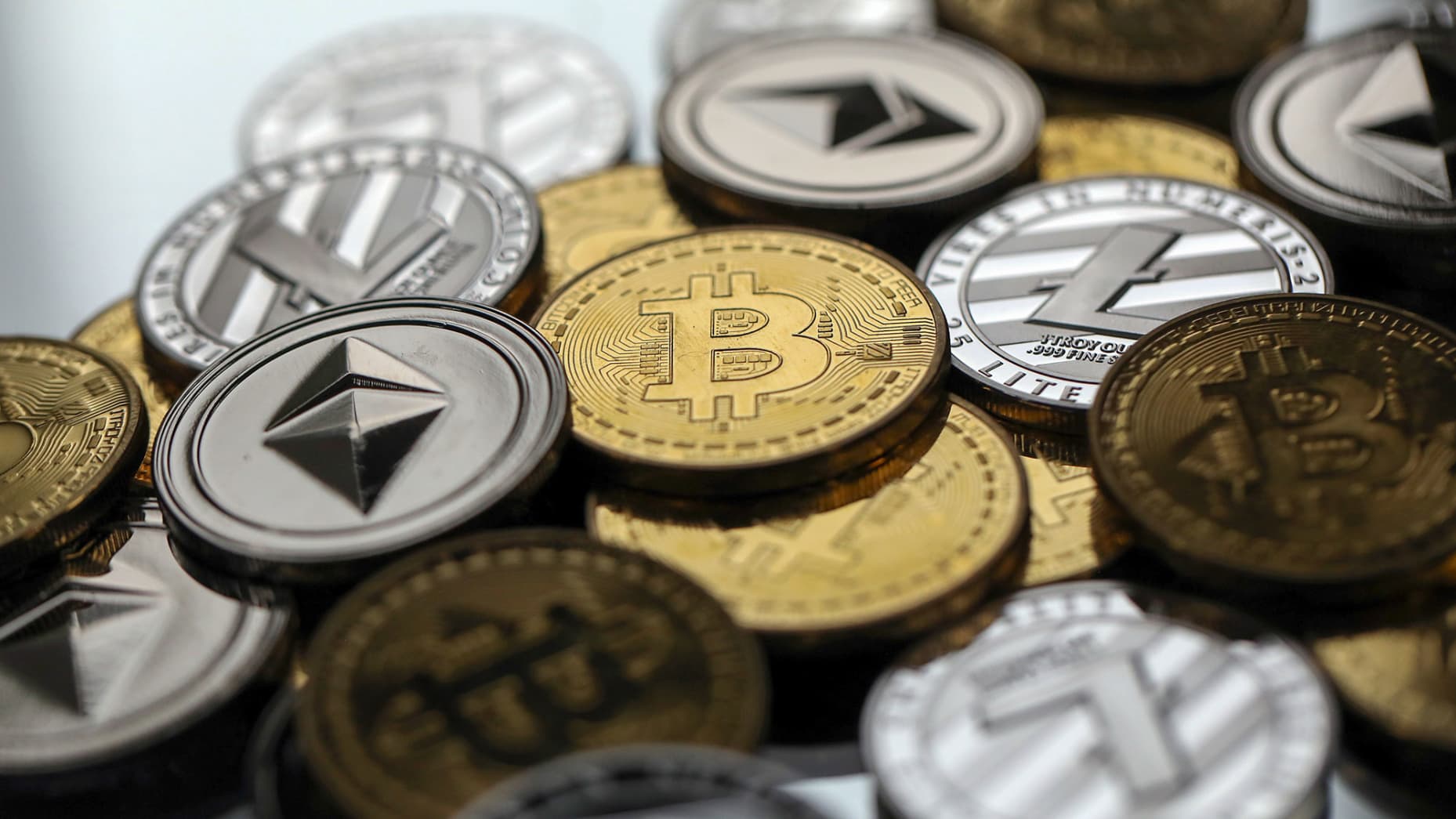
Google’s Quantum Chip Willow: Is Bitcoin in Danger
Google’s Quantum Leap: Introducing the Willow Chip
In a groundbreaking announcement, Google has introduced its first-ever quantum computing chip, named Willow. This marks a major milestone in the company’s journey towards developing practical quantum computers that could revolutionize industries. While Willow’s potential could reshape technology, it has raised an important question: Could quantum computing threaten Bitcoin’s security and its blockchain-based economy?
The Breakthrough: Willow’s Power and Speed
Google’s CEO, Sundar Pichai, recently unveiled Willow, a quantum processor that has the ability to solve certain computations in under five minutes — a task that would traditionally take a classical supercomputer 10^25 years (roughly 10,000 quadrillion centuries) to complete. This massive leap in computational power is what makes quantum computing so revolutionary.
The Willow chip is not only incredibly fast but also offers impressive error reduction, reconfigurability, and high connectivity algorithms. The breakthrough will likely pave the way for more practical applications of quantum computing in industries ranging from medicine to artificial intelligence.
What’s at Stake for Bitcoin?
With quantum computing now on the horizon, many are wondering: Could Willow or future quantum chips pose a threat to Bitcoin and other cryptocurrencies? Bitcoin, as the leading digital asset, relies heavily on cryptographic techniques like public key encryption to secure transactions and protect user privacy. The rise of quantum computing raises concerns because quantum computers theoretically have the ability to break traditional cryptography.
However, the threat to Bitcoin is not imminent, and here’s why:
The Scale of Quantum Computing Power Needed
At present, Willow has 105 qubits — an impressive feat but still far from enough to break Bitcoin’s security. To crack Bitcoin’s blockchain, a quantum computer would need at least 200 million to 400 million qubits — a scale that Willow has not reached. Additionally, Bitcoin’s cryptography, primarily based on Elliptic Curve Digital Signature Algorithm (ECDSA), would need a massive quantum leap in computing power to be at risk.
Bitcoin’s Response: Post-Quantum Security
Even though the advent of quantum computing could eventually pose a challenge to Bitcoin, it is not a crisis right now. Bitcoin’s protocol is already being designed with the future in mind, with post-quantum algorithms being developed to counter quantum threats. Ben Sigman, a well-known figure in the Bitcoin community, reassured users by posting on X (formerly Twitter) that “Bitcoin’s cryptography remains SAFU… for now.”
Google’s Quantum Innovation: What’s Next?
Despite the current distance between quantum capabilities and Bitcoin’s security, the quantum revolution is undeniable. Elon Musk, CEO of SpaceX, expressed his admiration for Google’s Willow chip, engaging in a conversation with Sundar Pichai about potential collaborations on future quantum projects. Musk even suggested the possibility of quantum computing playing a role in SpaceX’s Starship program, further highlighting the broad applications of this emerging technology.
Bitcoin’s Global Role: A Strategic Reserve for Nations?
While quantum computing may pose a future challenge, Bitcoin’s role as a global financial asset is continuing to grow. The notion of Bitcoin as a strategic reserve for nations has gained traction, especially after proposals from Russia and Donald Trump. Recently, Russian Deputy Anton Tkachev urged the country’s Minister of Finance to create a Bitcoin strategic reserve. The rationale behind this proposal is that Bitcoin, with its borderless and decentralized nature, could serve as a valuable addition to national reserves, much like traditional currencies.
Russia Follows the U.S. Lead on Bitcoin Reserves
Tkachev’s proposal highlights Bitcoin’s emerging role as an alternative store of value amidst economic uncertainty. He noted that Bitcoin’s lack of dependence on traditional financial institutions makes it an attractive asset for countries facing economic sanctions or inflation. Russia’s move follows in the footsteps of U.S. President-elect Donald Trump, who also advocated for a Bitcoin reserve during his remarks at the Bitcoin Conference earlier this year.
Russia’s plan could make it the first country to officially adopt Bitcoin as part of its national reserves, positioning the country as a leader in cryptocurrency adoption. Other nations, like Poland and Suriname, have also expressed interest in Bitcoin as a strategic reserve, with Polish presidential candidates campaigning for the inclusion of Bitcoin in their country’s balance sheet.
The Global Push for Crypto-Based Reserves
This growing trend of national Bitcoin reserves shows how countries are starting to see the value in cryptocurrencies as part of their financial strategy. Even as quantum computing threatens the security of traditional cryptography, the concept of Bitcoin as a global store of value is gaining significant traction.
El Salvador, which became the first country to adopt Bitcoin as legal tender, is setting an example that others are starting to follow. In the U.S., thousands of supporters have urged Congress to legalize cryptocurrency-based national reserves, a move that could transform the global financial landscape. As more countries explore the potential of Bitcoin, the pressure is mounting for regulations and infrastructure to support its inclusion in national financial systems.
Conclusion: Quantum Computing and Bitcoin’s Future
While quantum computing is undeniably a game-changer for many industries, it is not an immediate threat to Bitcoin. Willow, Google’s latest quantum chip, is still far from powerful enough to crack Bitcoin’s cryptographic security. Furthermore, Bitcoin’s ongoing evolution toward post-quantum cryptography ensures its resilience in the face of future quantum challenges.
However, as nations explore the idea of using Bitcoin as a strategic reserve, its role in global finance continues to evolve. The potential of Bitcoin as a store of value and its increasing adoption by countries seeking to diversify their financial reserves may shape the future of both the cryptocurrency market and national economies.
For now, Bitcoin’s cryptography remains secure, but as the quantum revolution unfolds, its future will depend on how well the cryptocurrency community adapts to these new technological challenges.
Disclaimer: The above press release has been provided by a third party. We do not verify or endorse the content and will not be responsible for any inaccuracies, claims, or damages arising from the same.