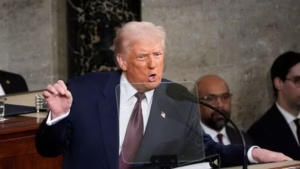
Trump’s Historic Crypto Summit: What It Means for the Future of Digital Assets
A New Era for U.S. Crypto Policy
In a groundbreaking event at the White House, President Donald Trump hosted a pivotal summit on March 7, 2025, where he promised to transform the U.S. stance on cryptocurrencies. The first-ever crypto summit brought together influential executives from across the crypto industry, signaling a clear shift in how the U.S. government views digital assets. The President used the opportunity to unveil his vision for the future of crypto in the U.S., emphasizing his commitment to fostering innovation and regulatory clarity.
With this summit, Trump not only announced strategic moves, such as creating a Bitcoin reserve and supporting stablecoin legislation, but also reassured crypto entrepreneurs that their struggles against federal restrictions under the previous administration were nearing an end. Let’s dive into the key highlights of this historic gathering and what it means for the future of crypto in America.
A Bold Stance: Trump’s Support for the Crypto Industry
Ending the “War on Crypto”
Trump opened the summit with strong words, acknowledging the difficulties the crypto industry had faced in recent years. He reflected on the heavy-handed tactics of the previous administration, which had, according to him, “strong-armed” banks into blocking crypto businesses. He also criticized what many in the crypto industry referred to as “Operation Chokepoint 2.0″—a series of measures that led to banks cutting ties with crypto businesses, thus stifling innovation and slowing the growth of the sector.
“I know that many of you have been fighting for years for this, and it’s an honor to be with you at the White House,” Trump said to the attendees. “We are ending Operation Chokepoint 2.0, and this marks the beginning of a new era where crypto can thrive.”
Trump’s comments made it clear that his administration would work to reverse the regulatory barriers imposed on crypto under former President Joe Biden’s administration. This declaration was met with enthusiasm from the industry’s leaders, who saw it as a much-needed victory after years of regulatory challenges.
Key Takeaways from the Summit: Trump’s Vision for Crypto Regulation
Supporting Stablecoin Legislation
One of the central topics of the summit was Trump’s strong endorsement for stablecoin legislation. In his remarks, Trump expressed his desire to see Congress pass a bill that would provide regulatory certainty for dollar-backed stablecoins before lawmakers break for the August recess.
“I want to express my strong support for the efforts of lawmakers in Congress as they work on bills to provide regulatory clarity for dollar-backed stablecoins and the digital assets market,” Trump said. “This is a tremendous opportunity for economic growth and innovation in our financial sector.”
Stablecoins, which are pegged to traditional currencies like the U.S. dollar, have become a crucial component of the crypto ecosystem. They enable faster and more stable transactions, particularly in the volatile world of digital assets. By supporting legislative efforts for stablecoins, Trump is positioning the U.S. to maintain its leadership role in the global digital asset market.
The Creation of a U.S. Bitcoin Reserve
Another headline-making announcement at the summit was Trump’s executive order to establish a U.S. Bitcoin reserve. According to the President, the U.S. government currently holds approximately 200,000 Bitcoin obtained through civil and criminal law enforcement actions. This Bitcoin will serve as the foundation of the new Bitcoin reserve, which will be managed like a “virtual Fort Knox.”
“From this day on, America will follow the rule that every Bitcoiner knows very well—never sell your Bitcoin,” Trump remarked. The reserve is set to position the U.S. as a major player in the global Bitcoin market and further cement the country’s role as a leader in digital finance.
Trump also expressed frustration over the federal government’s decision to sell off some of its Bitcoin holdings in the past. He referred to this as a “foolish” move and vowed not to repeat such mistakes. With the new Bitcoin reserve, the U.S. aims to hold and preserve these assets, which could potentially increase in value over time.
Creating a Secondary Crypto Stockpile
In addition to the Bitcoin reserve, Trump’s executive order also outlined plans to create a separate stockpile for other cryptocurrencies. This stockpile will be capitalized with digital assets seized through law enforcement actions, but no new funds will be used for non-Bitcoin assets. This measure is designed to further safeguard the U.S. government’s holdings in digital assets without putting a strain on taxpayer resources.
The U.S. Treasury Department will oversee the management of both the Bitcoin reserve and the secondary crypto stockpile. As part of the executive order, the government will conduct a thorough audit of its digital asset holdings to determine the full extent of its crypto inventory.
The Crypto Industry Responds: Industry Leaders Weigh In
A Historic Gathering of Crypto Executives
The crypto summit at the White House was attended by some of the most prominent figures in the industry. Notable attendees included Brian Armstrong, CEO of Coinbase, Tyler and Cameron Winklevoss of Gemini, Sergey Nazarov of Chainlink, and many others. These leaders were there to lend their support to Trump’s new vision for crypto and to discuss the opportunities that lie ahead.
During the summit, several executives took the opportunity to express their optimism about the direction in which the U.S. government is heading. The overall sentiment was one of excitement, as industry leaders applauded the President’s decision to support stablecoins and establish a Bitcoin reserve. For many, this event marked a turning point for the industry in its relationship with Washington.
What’s Next for U.S. Crypto Regulation?
Legislative Efforts for Stablecoin Clarity
As Trump mentioned during the summit, Congress is already working on legislation to bring more clarity to the regulation of stablecoins and digital assets. This effort is expected to provide the legal framework necessary for the stablecoin market to grow while ensuring that risks associated with these assets are properly managed.
With Trump’s support, the chances of passing such legislation before the August recess seem high. This would provide much-needed regulatory certainty for the crypto industry, which has been operating in a somewhat murky regulatory environment for years.
Trump’s Push for Pro-Growth Policies
Trump’s remarks at the summit demonstrated his strong commitment to creating a pro-growth environment for the digital asset sector. By ending Operation Chokepoint 2.0, supporting stablecoin legislation, and establishing a Bitcoin reserve, he has laid the groundwork for an environment where innovation in digital assets can thrive.
Looking ahead, it seems likely that the U.S. government will continue to play an increasingly supportive role in the crypto industry. This could open the door for further regulatory changes that encourage investment and innovation while ensuring consumer protection.
A New Era for U.S. Crypto Policy
The White House crypto summit marked a defining moment in the U.S. government’s approach to digital assets. Trump’s strong endorsement of the industry and his executive actions set the stage for a more favorable regulatory environment for crypto businesses in the country. With the creation of a Bitcoin reserve, support for stablecoin legislation, and a pledge to end regulatory overreach, the summit signaled that the U.S. is embracing its role as a global leader in digital finance.
As the U.S. government continues to refine its approach to crypto regulation, the future looks bright for the industry. Crypto businesses and investors can look forward to clearer guidelines and greater support, opening up new opportunities for growth and innovation.
Disclaimer: The above press release has been provided by a third party. We do not verify or endorse the content and will not be responsible for any inaccuracies, claims, or damages arising from the same.